¿Y si Rimowa colaborara con Nothing?: Cómo creamos un producto de viaje futurista usando NanoBanana Pro y Kling 3.0
Un desglose paso a paso del diseño de una maleta especulativa Rimowa x Nothing, su generación con IA y su transformación en un anuncio cinematográfico de producto — con prompts incluidos.
Esta es la Parte 2 de nuestra serie en la que probamos las herramientas de IA de las que todo el mundo habla — y desglosamos para qué sirven realmente.
Hay un flujo constante de nuevas herramientas, nuevos flujos de trabajo, nuevas “mejores formas” de hacer las cosas. Pero es difícil saber qué vale tu tiempo — y qué no.
Para eso existe exactamente esta serie.
Tomamos una idea sencilla de spec ad, la ejecutamos con herramientas específicas y te mostramos qué funciona en la práctica.
Sin teoría. Solo flujos de trabajo que puedes usar de verdad.
Para este, empezamos con:
¿Y si Rimowa colaborara con Nothing?
Un objeto de viaje de lujo que parece venir del año 2050 — combinando la estructura de Rimowa con la estética hardware inside-out de Nothing.
Si has visto el reel, aquí tienes el desglose completo de cómo se construyó.
Paso 1 — Diseñar el producto con NanoBanana Pro
Todo comienza con el producto.
El reto aquí no era solo generar una maleta — era fusionar dos sistemas de diseño muy distintos en algo que resultara creíble.
Rimowa representa el aluminio estructurado y acanalado y el patrimonio viajero. Nothing se define por componentes expuestos, layouts modulares y transparencia técnica.
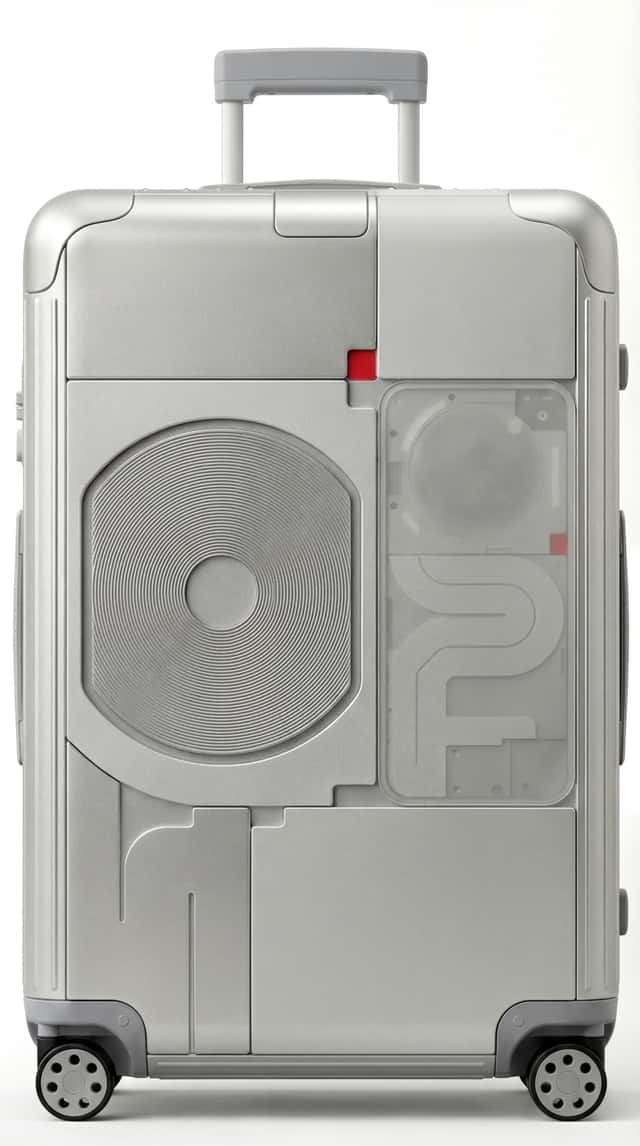
La solución fue diseñar la maleta como un sistema modular — casi como un producto desmontado y reensamblado en la superficie.
Decisiones clave:
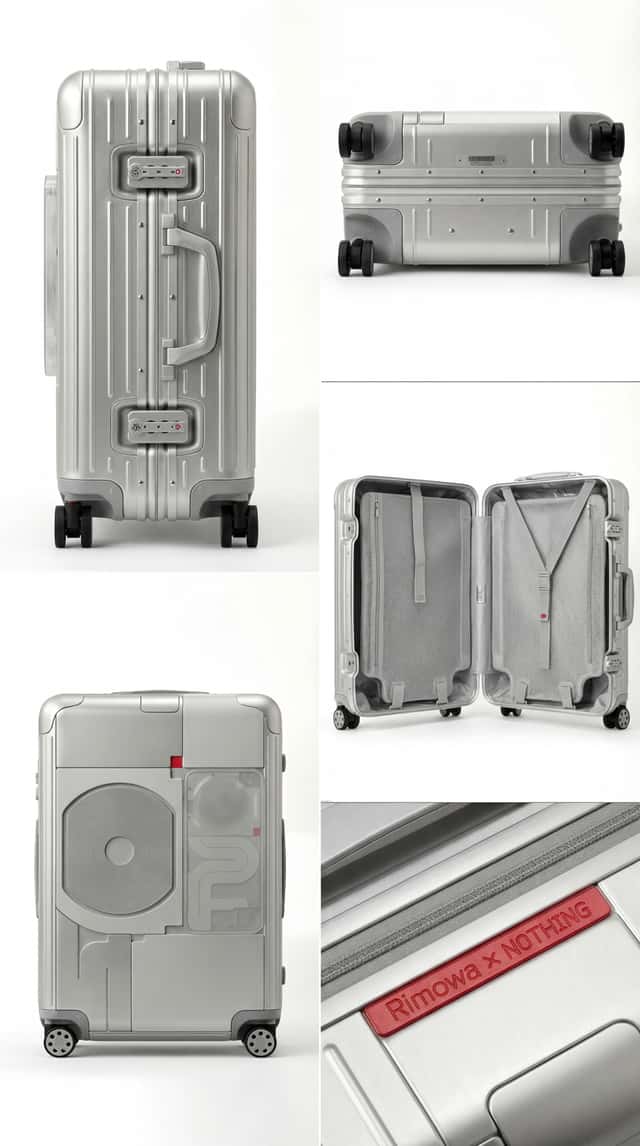
Una carcasa multipanel estilo “puzzle”
Sutiles ranuras de Rimowa en los bordes
Módulos circulares empotrados inspirados en el hardware de Nothing
Secciones semitransparentes que revelan la estructura interna
Microdetalles como marcas CE y tipografía dot-matrix
Un pequeño acento rojo como guiño reconocible a Nothing
Acabado industrial completamente mate
Ruedas minimalistas sin cubo
Lo importante aquí es la contención.
En lugar de forzar ambas marcas en un solo objeto, el objetivo es dejar que una lógica domine la estructura, mientras la otra la influye sutilmente.
Aquí el prompt listo para copiar:
Prompt
Create a suitcase where the body is designed as a modular, multi-panel jigsaw assembly, exactly mirroring the aesthetic of the Nothing Phone backplate. The shell is composed of flat, interlocking panels in various shades of matte “cool grey” and “off-white.” These panels are divided by clean, recessed 90-degree “Manhattan geometry” lines. Integrated directly into the surface material are several recessed circular modules. One circle features concentric, CNC-machined micro-grooves (like the phone’s induction area). Another segment is a flat, semi-translucent frosted panel that reveals organized, geometric structural layers beneath. A tiny, vibrant red square detail is positioned at a panel intersection. Fine technical “dot-matrix” text and CE-marking symbols are etched into a bottom corner panel. The vertical Rimowa grooves are only subtly present on the side edges, blending into the flat-panel design. All materials have a premium, non-reflective matte finish. The wheels are hubless and minimalist. Studio lighting with soft top-down shadows to emphasize the different depths of the panels. High-key white background, 8k render, ultra-realistic industrial design aesthetic.
Paso 2 — Convertirlo en un visual de campaña
Una vez que el producto funciona, el siguiente paso es enmarcarlo como lo haría una marca.
Antes de la animación, creamos un key visual potente — algo que pudiera existir como imagen fija de campaña.
La idea era aislar completamente la maleta y tratarla como un objeto de diseño de colección.
Un producto Composición centrada Configuración de iluminación estricta Sin distracciones
Este paso es lo que hace que el concepto parezca real. Sin él, se queda en un render.
Prompt listo para copiar:
Prompt
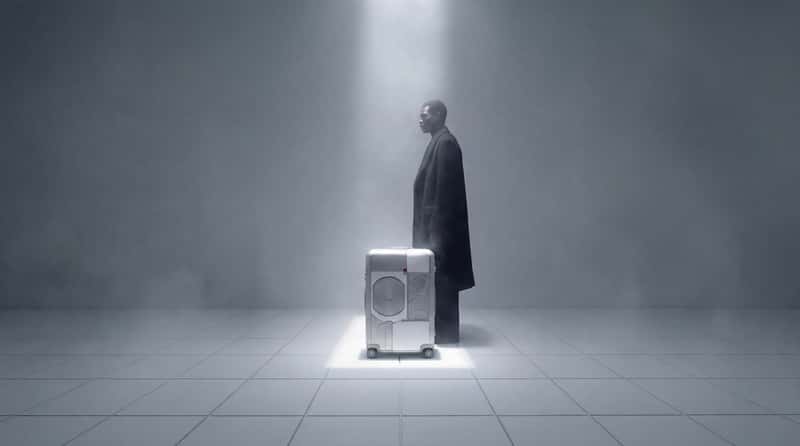
A clinical, high-fashion tableau of a single reference suitcase standing alone in the exact center of the scene on one intense square pool of light on a matte white stage. The rest of the grid remains completely empty, with no other suitcases or objects visible. The air is silent and slightly fogged. Only the suitcase from the reference image is shown, with no new suitcase designs introduced. The exact shape, proportions, materials, details, handle design, wheel design, shell construction, and overall silhouette of the original reference case are preserved exactly. Contemporary product photography, cinematic still, indie art house meets modern Hollywood, neo-noir minimalism, high-fashion editorial with references to 1960s stage tableaux and modern performance art installations. Wide symmetrical frame centered on the grid, slightly elevated camera height to emphasize the chessboard pattern. A rigid geometric composition with only one illuminated square occupied: the single reference suitcase positioned precisely in the middle, surrounded by empty negative space and an otherwise untouched grid. Shallow telephoto compression slightly flattens the depth while compressing the background into a uniform gray-white void. The scene features only one suitcase: the exact reference suitcase and nothing else. No duplicates, no scale variations, no additional suitcase models, no alternative constructions. Brushed shell surfaces, ribbed textures, polished handles, wheels, and metal accents catch the hard top light. The object feels like a collectible luxury design piece, isolated with strict visual discipline. Minimalist white soundstage with a large matte cyclorama and a floor masked into a perfect grid of illuminated squares, faint haze for volumetric light. Hard directional top lighting creates one crisp square pool of light beneath the suitcase, while the surrounding grid remains empty and subdued. Low side fill retains deep shadows and sculpts the suitcase form.
Paso 3 — Expandir el mundo (Opcional)
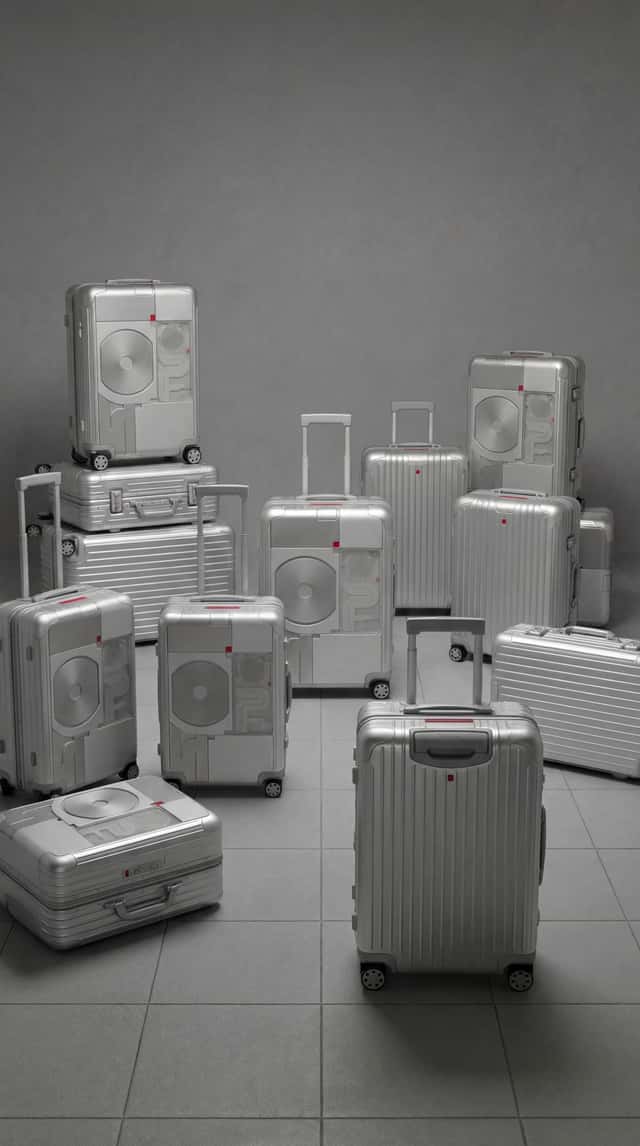
Desde aquí, exploramos variaciones adicionales:
Diferentes perspectivas Múltiples maletas en el espacio
Esto no es necesario para el flujo de trabajo principal, pero resulta útil si quieres construir un sistema de campaña más amplio o múltiples outputs.
Paso 4 — Animarlo en Kling 3.0
Con el producto y el key visual en su lugar, el foco se desplaza al comportamiento.
En lugar de explicar características, la animación las muestra.
La idea central:
La maleta te sigue.
Ese único comportamiento es suficiente para implicar inteligencia, utilidad e innovación en el producto.
Prompt listo para copiar
Prompt
Cinematic zoom-in on the futuristic silver suitcase. A woman wearing an elegant long black dress and black high-heeled stilettos walks across the frame from left to right. The suitcase moves autonomously, following closely behind her as she walks, without her touching it. The minimalist gray studio is filled with a light, subtle fog. High-quality textures, realistic movement, dramatic studio lighting.
Segunda variación para un movimiento más controlado:
Prompt
Temporal High-Fashion Sequence: A wide symmetrical shot on a misty white grid stage. A tall fashion figure in an architectural black overcoat enters the frame from the right edge, walking with a slow, rhythmic editorial gait toward the left. Grounded Autonomous Motion: The silver ribbed reference suitcase follows the person independently, rolling smoothly on its wheels while maintaining constant, firm contact with the matte white floor. The suitcase glides exactly two steps behind the figure without any visible hands, handles, or physical contact, staying perfectly locked to the ground. Lighting & Atmosphere: As they cross the center, they pass through an intense vertical “God-ray” of light that illuminates the metallic textures and the coat’s silhouette. Fine cinematic fog swirls around the wheels on the tiles. Exit: Both exit the frame completely through the left edge. Static camera, high-contrast neo-noir aesthetic, 4k cinematic. no floating, no hovering, no flying.
Paso 5 — Conectar los fotogramas
Para finalizar la pieza, usamos Kling para suavizar la transición entre fotogramas y garantizar la continuidad visual.
Prompt
Smooth transition between start and end frame. Maintain consistent lighting, materials, proportions, and environment. Ensure cinematic continuity and stable camera behavior.
Si ejecutas este flujo de trabajo tú mismo, verás rápidamente dónde cada herramienta es fuerte — y dónde empieza a fallar.
Ese es el objetivo de esta serie.
No solo mostrar lo que es posible, sino ayudarte a decidir qué vale la pena usar de verdad.